

Mastering BANT Budget Questions: Unlocking SaaS Sales Opportunities
In the dynamic world of B2B SaaS, a skilled sales professional knows that not all leads are created equal. You can have the most enthusiastic prospect with a pressing problem, but if the budget isn’t there, or isn’t understood, that opportunity might just be a time sink. This is where the ‘Budget’ component of the BANT sales methodology becomes your strategic advantage.
At GTM Playroom, we work with early-stage founders and growing SaaS teams to build the sales fundamentals that actually move pipeline. And understanding budget is foundational, not as a gatekeeping exercise, but as respectful, insightful budget qualification in sales that surfaces genuine opportunities.
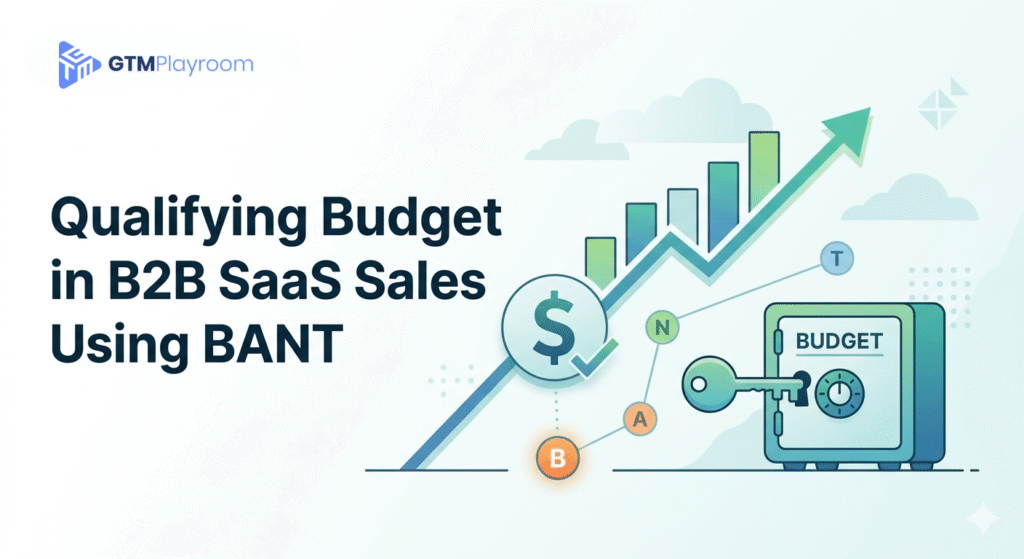
Why ‘Budget’ Isn’t Just About Money in SaaS Sales
For SaaS companies, budget isn’t merely about a one-time purchase. It reflects a prospect’s willingness to invest in a long-term solution that will impact their operational costs, revenue streams, and overall efficiency. Ignoring the budget early on leads to stalled deals, or worse, deals that close but churn quickly due to misalignment.
A strong budget discussion helps you:
- Prioritize: Focus your time on prospects who are genuinely ready and able to invest.
- Align Expectations: Ensure your solution’s value aligns with their financial capacity.
- Build a Strong Business Case: Help your prospect internally justify the investment based on tangible ROI.
Asking the Right BANT Budget Questions Without Being Pushy
The key is shifting the conversation from “how much money do you have?” to “what value do you expect from this investment?”
1. Framing the Investment
- “Based on the challenges we’ve discussed, what kind of investment are you anticipating to solve a problem like this?”
- “Many of our clients look at this as an investment in [specific benefit, for example reducing operational costs or improving retention]. How do you typically evaluate new investments in this area?”
2. Understanding Budget Allocation and Source
- “Do you currently have a budget allocated for a solution that addresses [their specific pain point]?”
- “How does your organisation typically fund new software or technology initiatives of this scale?”
- “Are there specific budget cycles or approval processes we should be aware of?”
3. Connecting Budget to Value and ROI
- “If you were to implement a solution that achieved [key benefit], what kind of financial impact would that have on your business?”
- “What’s the cost of not solving [their problem]? Have you quantified the impact of lost time, inefficiencies, or missed opportunities?”
4. Addressing Current Alternatives
- “How are you currently managing [the problem area]? What are the costs associated with your current approach?”
This helps benchmark your solution’s value directly against the status quo, one of the most effective moves in B2B sales budget discovery.
Tips for Effective Budget Qualification in Sales
Lead with Value, Not Price
Before cost comes up, make sure the prospect clearly understands the problems you solve and the value you bring. Price becomes far less of an obstacle when value is overwhelmingly clear.
Discuss ROI Early
Frame your solution as an investment that yields returns. Case studies, testimonials, or a simple ROI calculation can shift the entire tone of a budget conversation.
Don’t Assume ‘No Budget’ Means No Opportunity
When a prospect says they don’t have budget, it often means “it’s not a priority yet” or “I haven’t built a business case for it internally.” Dig deeper before you qualify out.
Offer Tiered Solutions
Flexible pricing tiers let you gauge comfort zones without forcing a direct number. “Our solution starts from X, does that align with what you’re looking for?”
Understand Their Budget Cycles
B2B purchasing decisions often align with fiscal years or quarterly cycles. Knowing their timeline helps you time your follow-ups and proposals with precision.
Help Them Build an Internal Business Case
If budget isn’t immediately available, partner with your internal champion. Give them data, case studies, and ROI framing they can use to advocate for the investment internally.
Know When to Qualify Out
Sometimes a lead genuinely has no path to budget. Knowing when to disengage respectfully keeps your pipeline clean and your time focused on the right opportunities.
Linking Value to Price: The Art of Budget Justification in SaaS Sales
The ultimate goal of budget qualification in sales is to ensure the prospect perceives the value of your solution to be significantly higher than its cost.
Quantify the Impact
“Our analytics dashboard saved one client 15 hours of manual reporting per week. At a loaded salary of $50/hour, that’s $750/week, nearly $40,000 annually. Our subscription is Y, with a clear positive ROI within Z months.”
Numbers make the abstract concrete. Use them wherever you can.
Solve a Big Pain
If your SaaS eliminates a major operational bottleneck, prevents revenue loss, or enables new revenue streams, price becomes secondary to the solution being offered.
Focus on the Why
Remind them why they started the conversation, their pain points and desired outcomes. Connect your solution’s features directly to those, then link price to the delivered value.
Build the Sales Skills That Actually Close Deals
Mastering budget discussions is a learned skill and it’s one that separates good sales professionals from great ones. At GTM Playroom, we help early-stage B2B tech founders build their 0-to-1 GTM motion, and we place pre-assessed sales talent with funded SaaS teams who need people ready to have these conversations from day one.
Not Sure Where Your GTM Motion Stands?
Before you can qualify your prospects on budget, you need clarity on your own sales readiness. Take the GTM Health Check Up to find out where your pipeline, positioning, and sales process actually stand, and get a personalised action plan to fix the gaps.
Conclusion
The ‘Budget’ component of BANT is more than a financial checkpoint. It is a critical indicator of a prospect’s seriousness and a cornerstone of a healthy SaaS pipeline. Ask the right BANT budget questions, focus on value over price, and understand the nuances of financial decision-making. That is how you consistently unlock real sales opportunities and drive predictable revenue growth.
Related Articles



Want to Apply These Insights?
Book a 45-minute GTM diagnostic and get a clear roadmap for your next 30-60-90 days.