
Cold Calling Strategies for SDRs, SaaS Sales Playbook
In a space dominated by automation and outbound email sequences, cold calling offers a rare, human moment. It’s direct, real-time, and gives you instant feedback.
Cold calling strategies for SDRs in SaaS aren’t just old-school tactics. They’re one of the most effective ways to break through today’s noisy digital landscape. As inboxes overflow and social media becomes crowded, a well-executed cold call can still create a direct and meaningful conversation.
Whether you’re a new Sales Development Representative (SDR) in the SaaS world or looking to increase your connect and conversion rates, this step-by-step guide covers proven SaaS cold calling strategies that help you start better conversations and book more meetings with qualified prospects.
Why Cold Calling Still Works in SaaS
In a space dominated by automation and outbound email sequences, cold calling offers a rare, human moment. It’s direct, real-time, and gives you instant feedback. It allows you to:
- Build rapport faster than text
- Gauge tone, intent, and objections live
- Differentiate yourself from the masses
- Book meetings with qualified prospects in fewer steps
When layered into a multichannel approach, cold calling becomes a powerful connector between intent and conversion.
Step-by-Step Cold Calling Strategy for SDRs
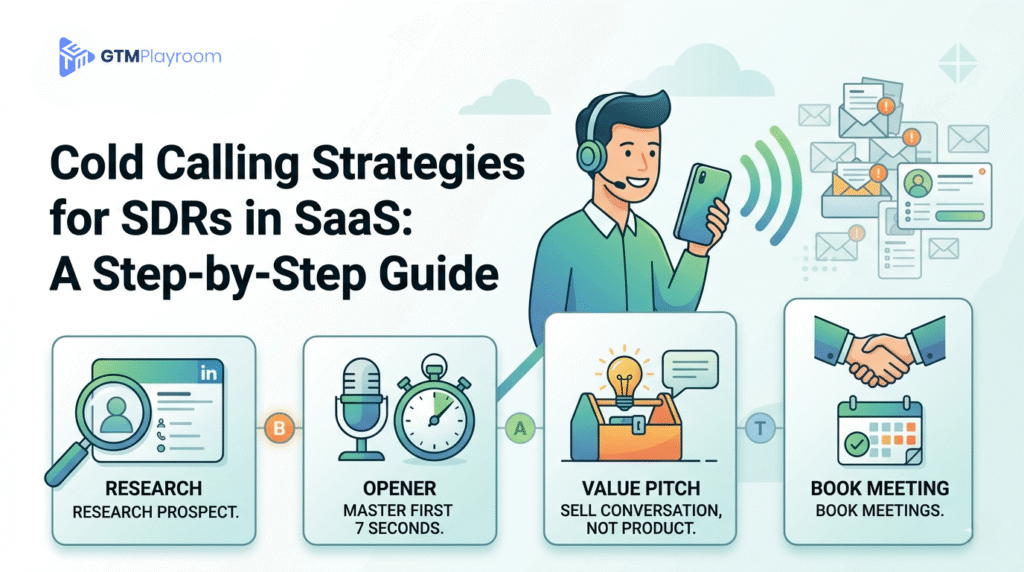
1. Start with Research: Know Your Prospect
Gone are the days of dialing blindly. Before every call:
- Review the prospect’s LinkedIn profile
- Check company updates, funding news, or product launches
- Identify their role and potential pain points
This context helps you personalize your opener and establish relevance right away.
Tip: Tools like Apollo, Clay, or LinkedIn Sales Navigator make research quick and efficient.
2. Master the First 7 Seconds
Your opener decides whether the prospect stays or tunes out.
A good cold call starts with clarity and permission:
“Hi [Name], this is [Your Name] from [Company]. I know this is a cold call. Do you have 30 seconds for me to tell you why I’m calling?”
This shows confidence and respect for their time, increasing the chances of them staying on the line.
Avoid overused lines like “How are you today?” They sound scripted and fake.
3. Sell the Conversation, Not the Product
Your goal isn’t to pitch your platform or close a deal. Your real win? Securing a follow-up meeting or demo.
Focus your call around solving a problem:
“We help [role]s at [company type] reduce [pain point] by [solution]. Curious if that’s relevant to you?”
Lead with value. Be clear about what’s in it for them if they stay in the conversation.
4. Use a Cold Calling Framework
Structure gives you control while still sounding natural. Here’s a basic structure:
- Introduction: Name, company, permission to speak
- Value Proposition: Tailored to their role
- Discovery Question: e.g., “How are you handling [X] today?”
- Handling Objections: Address with empathy and curiosity
- Close for Meeting: “Would it make sense to explore this further next week?”
You can adapt this based on your product and market maturity, but the key is to stay clear and conversational.
5. Anticipate and Handle Objections Smoothly
Objections are part of the game. You’ll hear:
- “I’m not interested.”
- “Now’s not a good time.”
- “Send me an email.”
Instead of resisting, acknowledge and redirect:
“Totally fair. A lot of people say the same until they hear how we helped [client] reduce churn by 30%.”
“No problem at all. Just so I don’t waste your time, can I ask one quick question before I let you go?”
This keeps the door open for engagement, even if it’s a short one.
6. Optimize Timing and Volume
Cold calling is part science, part numbers game.
Best times to call:
- Morning: 8 AM – 10 AM
- Mid-afternoon: 3 PM – 5 PM
- Avoid Mondays and Friday evenings
Call in blocks: Power hours of 60–90 minutes with focused lists tend to yield better results than scattered attempts.
Aim for consistency. Cold calling gets easier with rhythm.
7. Follow Up Beyond the Call
Not every call will result in a meeting, but many will create curiosity. That’s where a follow-up email or LinkedIn message does the work.
Post-call sequence:
- Day 0: Call + email
- Day 2: LinkedIn connect with a short message
- Day 5: Soft bump email (“Just checking in on this…”)
Multichannel touchpoints increase recall and improve response rates.
8. Track Your Metrics and Learn
Track what matters:
- Call-to-connect rate
- Connect-to-meeting booked rate
- Objections received vs. handled
- Most common reasons for success or drop-off
Keep a call log or voice notes. Identify what phrases work, which openers flop, and which industries respond better.
Cold calling isn’t just about dialing. It’s about iterating.
Bonus: Mental Framework to Stay Consistent
Cold calling comes with its emotional rollercoaster. Rejections, hang-ups, and no-responses are part of the job. Here’s how to stay in the game:
- Set “activity goals” instead of just outcome goals (e.g., 50 dials/day)
- Celebrate small wins, even a good conversation
- Reframe rejection as “data,” not personal failure
- Work with a buddy or teammate to do live call blocks
Over time, you’ll develop resilience, and results will follow.
Final Thoughts
Cold calling in SaaS isn’t about tricking people into taking meetings. It’s about starting real conversations that solve real problems. When done right, it’s still one of the fastest and most scalable ways to build pipeline.
Here’s what top-performing SDRs do differently:
- They research before dialing
- They structure their pitch with empathy
- They handle objections like conversations, not rejections
- They track, learn, and adapt
And most importantly, they keep showing up.
Want to sharpen your outbound game? Get your GTM health checkup.
Related Articles

Want to Apply These Insights?
Book a 45-minute GTM diagnostic and get a clear roadmap for your next 30-60-90 days.