

The GTM Tech Stack Early-Stage Founders Actually Need (Not the One VCs Talk About)
Most founders either buy nothing and run GTM off memory and spreadsheets, or buy ten tools at once and spend more time managing logins than selling. Neither works.
Two failure modes show up constantly in early-stage GTM, and they look opposite but come from the same root cause: no deliberate architecture. One founder runs the entire sales motion out of their memory and a spreadsheet, discovers three months in that they’ve lost track of half their pipeline, and finally buys a CRM in a panic. Another founder, trying to look sophisticated, buys ten tools in the first month — a $15K enterprise data platform, a heavyweight sales engagement suite, a BI tool — and spends more time managing logins and reconciling data between systems than actually selling.
Neither is a tooling problem. Both are architecture problems. Here’s what founders actually need before Series A, and what to deliberately skip.
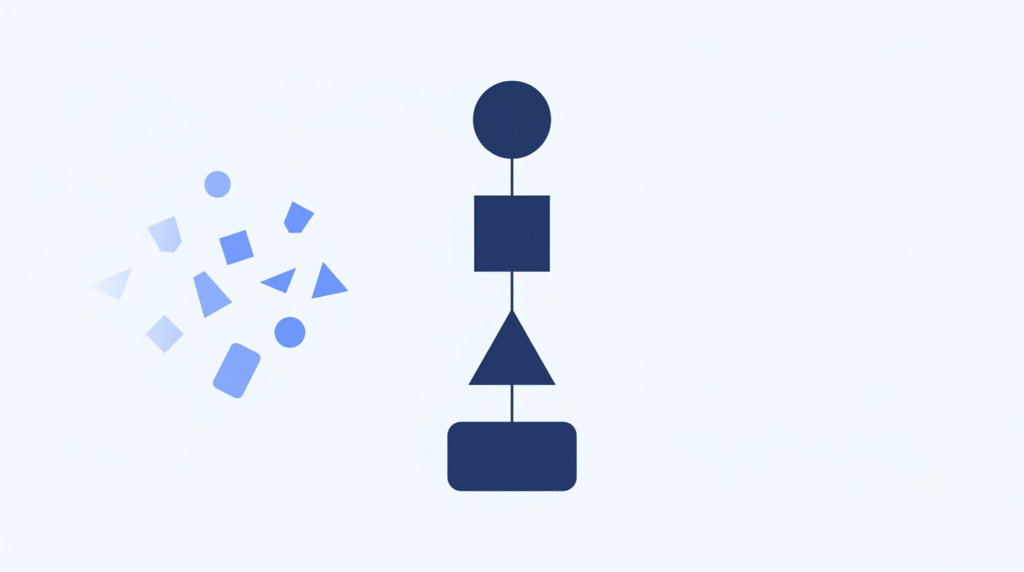
The four things you actually need – in this order
1. A CRM, even a lightweight one
This is non-negotiable from day one, but it doesn’t need to be Salesforce. HubSpot is the default recommendation for companies from pre-seed through Series B — it’s accessible, has native marketing features, and doesn’t require a dedicated administrator to keep running (FullFunnel). Its job is simple: be the single place every prospect, conversation, and deal status actually lives, so nothing depends on a founder’s memory.
Salesforce becomes worth the complexity later — once you have custom reporting needs, multiple teams, and dedicated operations support to configure and maintain it. Before that, its cost and complexity typically outweigh the benefit.
2. A lean prospecting and enrichment layer
You do not need a $15,000 enterprise database seat to start outbound. That assumption — that effective prospecting requires an expensive static database plus a RevOps hire to run it — kills more early pipelines than it saves, because founders spend the first month on tooling procurement instead of actually talking to prospects (Origami). What you actually need is a way to find accurate, current contact data for a tightly defined ICP — even a lean enrichment tool paired with manual list-building is enough at this stage.
3. A sending and sequencing tool, kept separate from your main domain
Whatever you use to run outbound sequences, keep it on a domain separate from your primary company email. This protects the domain reputation your actual business communication depends on, and it’s a mistake that’s expensive to unwind later if your cold outbound damages the domain your customer emails and invoices go out from (FullFunnel).
4. One place to actually look at the numbers
You don’t need a full BI stack pre-Series A. You need one dashboard, even a simple one inside your CRM, that tells you pipeline coverage, conversion by stage, and where deals are actually stalling. The goal isn’t sophisticated analytics — it’s making sure decisions are based on what’s actually happening, not what you assume is happening.
What to deliberately skip until later
- A dedicated RevOps hire. Founders often assume RevOps is required to “do GTM properly.” In practice, founders handle GTM responsibilities themselves during this stage, and RevOps becomes valuable specifically once operational complexity — multiple reps, multiple channels, reporting needs beyond one dashboard — actually exists to manage (Anfloy). Hiring RevOps before that complexity exists means paying someone to build process around a motion that hasn’t been proven yet.
- Enterprise-grade sales engagement platforms. Tools built for large revenue teams with dedicated administrators require exactly that — dedicated resources to configure and maintain — which most pre-Series A teams don’t have and don’t need yet (La Growth Machine).
- A tool for every individual problem as it appears. The most consistently mishandled pattern in GTM tooling: a new problem shows up, a new point solution gets purchased to solve it, and the stack grows additively with no corresponding investment in how the tools actually connect. The result is a RevOps team (once you have one) spending most of its time cleaning data and reconciling reports across disconnected systems, instead of driving revenue insight (InTandem).
The principle underneath all of this: fewer tools, cleanly connected, beats more tools loosely stitched together
This holds true at every stage, not just pre-seed. Top-performing RevOps teams at scale are actively reducing their stacks to 3-4 tightly integrated platforms, down from ten or more point solutions that used to be standard (Unify). If that’s the direction mature teams are consolidating toward, there’s no reason for an early-stage company to start at the sprawling end of that spectrum and work backward.
The real cost of a fragmented stack isn’t just the subscription fees. It’s the hours spent reconciling data between systems that don’t talk to each other, and the decisions made on incomplete or contradictory information because nobody’s sure which tool has the “real” number. Most stack problems are actually process problems wearing a technology costume — adding more software to a broken process just makes the process faster and more broken (ZoomInfo).
A simple sequencing rule for founders building this out
- CRM first, always — before any other tool, get the single source of truth in place.
- Add the next tool only when a specific, named bottleneck appears — not because a tool looks impressive or a competitor uses it.
- Choose tools that integrate natively with your CRM over point solutions that require manual data reconciliation.
- Resist adding a tool to solve a process problem. If reps aren’t following up consistently, that’s a coaching and accountability issue — a new sequencing tool won’t fix it, it’ll just make the same gap happen faster.
Why this matters as much as the GTM motion itself
A tangled, over-bought tech stack doesn’t just cost money — it actively slows down the feedback loop a founder needs to figure out what’s working. If pipeline data is split across three disconnected tools, you can’t see clearly enough to know whether your ICP is right, whether your messaging is landing, or whether the motion needs to change. Clean architecture isn’t a nice-to-have layered on top of GTM strategy. It’s the thing that makes the strategy visible enough to actually improve.
This is exactly the kind of foundational systems work we help early-stage founders get right at GTM Playroom — building a lean, deliberately sequenced stack that actually supports the motion you’re running, instead of one assembled reactively, tool by tool, under pressure.
If your GTM tooling feels more like a management burden than a growth engine, talk to us — this is usually a faster and cheaper fix than it feels like from inside the spreadsheet chaos.
Sources: FullFunnel — The 2025 Go-to-Market Tech Stack, Origami — Startup GTM Hire Stack 2026, Anfloy — GTM Engineering vs RevOps, La Growth Machine — GTM Tech Stack 2026, InTandem — RevOps Framework 2026, Unify — RevOps Tech Stack 2026, ZoomInfo — RevOps Tech Stack Guide
Want to Apply These Insights?
Book a 45-minute GTM diagnostic and get a clear roadmap for your next 30-60-90 days.