

When Should a Founder Hire Their First Salesperson? A Data-Backed Framework
Most founders ask this question the wrong way. They ask what ARR they need to hit before hiring a salesperson, as if there’s a magic number waiting on the other side of a spreadsheet.
Most founders ask this question the wrong way. They ask “what ARR do I need to hit before I hire a salesperson,” as if there’s a magic number waiting on the other side of a spreadsheet. There isn’t. Companies have handed off sales successfully at $300K ARR and failed badly at $2M ARR — the difference wasn’t revenue, it was whether a repeatable process existed to hand off in the first place (Boomerang).
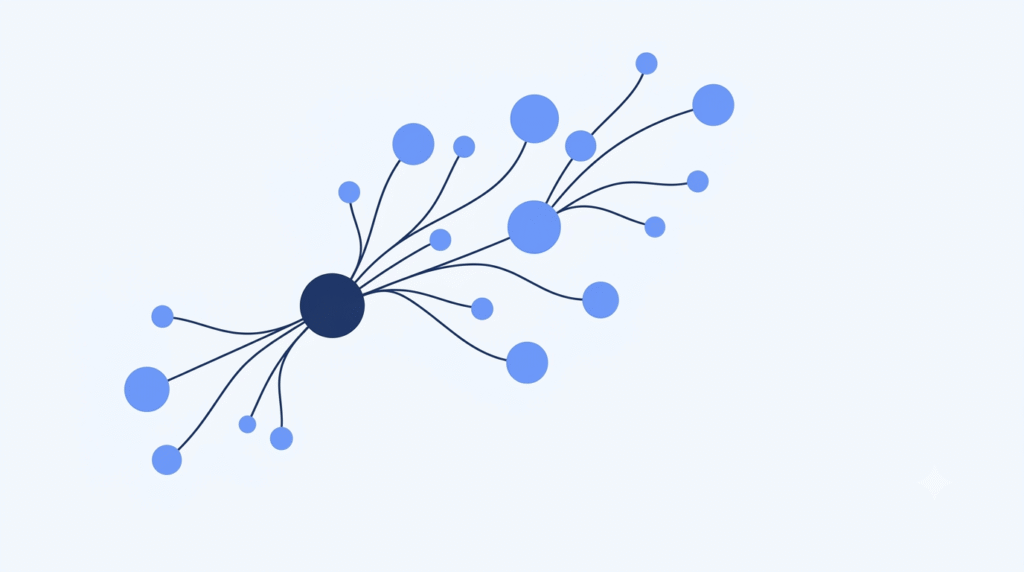
If you’re a technical or product-background founder trying to figure out when to step back from sales, here’s the framework that actually holds up.
The real gate is repeatability, not revenue
Before you hire anyone, you need to be able to answer these without hesitating:
- Who is your ICP, specifically — not “SaaS companies,” but the exact profile that buys fastest?
- What’s your average sales cycle length and typical deal size?
- What are the three objections that come up in almost every deal, and what do you say to each?
- What makes a lead “qualified” versus just “interested”?
Most operators who’ve built and coached this transition converge on a similar bar: 10–20 customers closed personally, with a pattern you can describe end to end (Monkhouse & Co, Ash Rust). If you can’t yet describe why your last five customers bought, a new hire won’t be able to either — they’ll spend months rebuilding a process that only exists in your head, and that’s usually where the hire fails, not because the person was wrong for the job.
Jason Lemkin’s version of this rule of thumb for SaaS specifically: founders should generally stay on sales calls until they’ve personally closed somewhere between 20 and 50 deals, roughly the $1M–$2M ARR range for most B2B SaaS motions (Startup Fortune).
What you’re actually solving for: capacity, not delegation
The instinct to hire usually shows up around month six or eight, when sales calls start feeling like a distraction from the roadmap. That instinct is worth questioning. The better diagnostic question is: what’s the actual constraint?
- If you have more qualified conversations than hours in the week, you’re closing-capacity constrained — hire a closer.
- If you can still close everything that gets qualified but there simply isn’t enough top-of-funnel, your problem is pipeline generation, not closing — fix outbound or marketing before you hire an AE.
Most founders hit the closing-capacity wall first, but it’s worth checking which problem you actually have before defaulting to an AE hire (Boomerang).
Who to hire first: full-cycle, not a split team
At the earliest stage, most GTM operators recommend a founding AE who can both source and close — not a split SDR/AE structure. Pipeline volume rarely justifies splitting the function this early, and a full-cycle rep gives you cleaner, faster feedback on what’s actually working (Activated Scale).
2026 comp benchmarks for a founding AE in B2B SaaS:
- Base: $130K–$160K, OTE around $120K–$180K depending on motion (SMB/mid-market vs. enterprise)
- Equity: 0.1%–1%
- Commission structure: typically 50/50 base-to-variable split for AEs
A useful sanity check from a16z’s Peter Levine: a sales hire should generate at least 3x their fully loaded cost. A founding AE at $200K fully loaded closing $700K in year-one ARR clears that bar comfortably (Activated Scale).
The mistake that costs the most: hiring a VP too early
The single most expensive move founders make in this transition isn’t hiring the wrong AE — it’s hiring a VP of Sales to “figure out GTM” before a motion exists to lead. A VP without a proven, repeatable playbook underneath them either invents a motion that doesn’t fit your ICP, becomes an expensive individual contributor with nothing to manage, or churns within 18 months, taking $400K–$900K in salary, equity, and lost pipeline with them (PulseRevOps).
The typical readiness bar for a VP of Sales: 2–3 non-founder reps each closing at 70%+ of founder productivity, a documented sales motion, and consistent cycle length and win rate held for two consecutive quarters — usually somewhere in the $1.5M–$3M ARR range, occasionally as low as $1M for a fast PLG-assisted motion.
The sequence, in order
- Founder sells personally until a repeatable pattern exists (10–20 closed deals, documented objections, defined ICP).
- Hire a founding AE (or two) to validate the playbook while actively selling — not to invent a new one.
- Document relentlessly as you go — the ICP, the objection-handling script, the qualification bar. This is what actually gets handed off, not a job title.
- Hire a VP of Sales or Head of Sales once 2–3 reps are independently productive and the motion has held for two quarters.
Skipping a step in this sequence is the single most common reason founder-led sales transitions fail — not because the hire was a bad person, but because the system underneath them wasn’t ready for anyone but the founder to run it.
This is precisely the 0-to-1 stage GTM Playroom works in with early-stage founders, turning founder-led sales patterns into a documented, hireable system before you make that first sales hire, so the transition doesn’t cost you a quarter of pipeline while someone else relearns what you already know.
If you’re closing deals yourself and starting to feel the pull to hire, talk to us before you write the job description — the sequence matters more than the timing.
Sources: Boomerang, Monkhouse & Co, Ash Rust, Startup Fortune, Activated Scale, PulseRevOps
Related Articles


Want to Apply These Insights?
Book a 45-minute GTM diagnostic and get a clear roadmap for your next 30-60-90 days.