

The Do’s and Don’ts of Connection Requests in LinkedIn Prospecting
LinkedIn prospecting has become one of the most powerful tools for connecting with potential clients, business partners, and decision-makers.
In today’s professional world, your network determines your opportunities. LinkedIn prospecting has become one of the most powerful tools for connecting with potential clients, business partners, and decision-makers. But just like in real life, there are rules of etiquette that separate the SDRs who get results from those who get ignored. Here’s everything you need to know about the dos and don’ts of connection requests on LinkedIn.
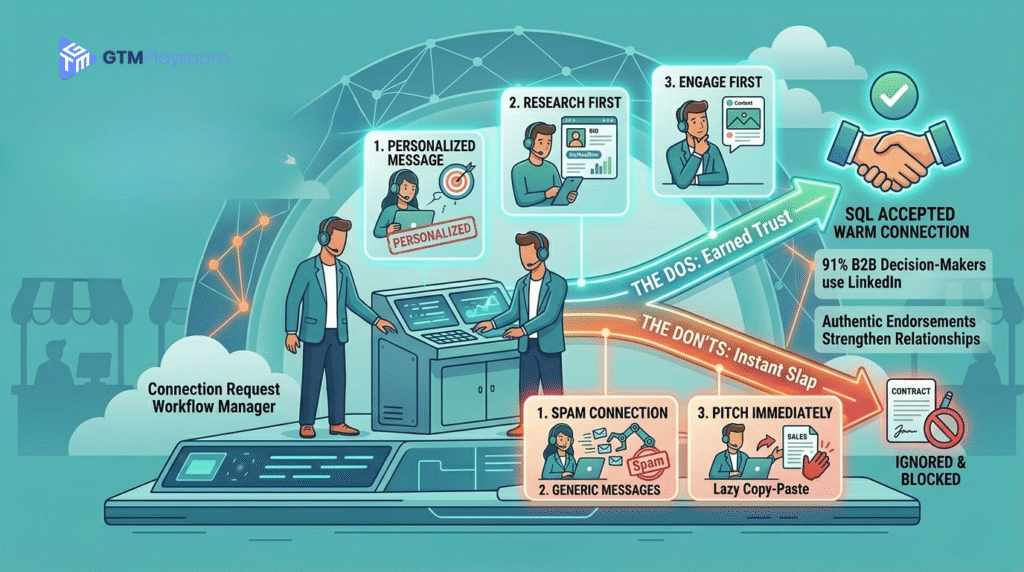
The Dos of LinkedIn Prospecting
1. Personalize Every Connection Request
Generic connection requests simply don’t work. Think about it: if a complete stranger walked up to you at a party and immediately asked to be friends with no context, you’d feel awkward. LinkedIn is no different.
Take a few moments to read through the person’s headline, bio, or About section. Pull something specific from their story and reference it in your message. Personalization signals genuine interest and dramatically improves your acceptance rate.
2. Research Before Connecting
Before hitting send on a connection request, spend a few minutes on the person’s profile. Look at their role, industry, recent activity, and career history. Even a quick skim of their jobs and education gives you enough context to craft a meaningful message.
LinkedIn is a professional platform. Every message you send should have purpose behind it. Connecting randomly without context wastes both your time and theirs.
3. Engage with Their Content First
One of the most effective ways to warm up a cold connection is to engage with their content before reaching out. Like, comment, or share their posts thoughtfully. By the time you send your connection request, they’ve likely already seen your name and possibly visited your profile.
This turns a cold outreach into a semi-warm one, and it makes your connection request feel far more natural and earned.
4. Be Clear About Your Intentions
Transparency builds trust. When sending a connection request, briefly explain why you want to connect, whether it’s for business collaboration, industry networking, or a specific conversation you’d like to start.
Be honest and stay consistent with what you say. Prospects who feel misled early will never convert later. Clarity upfront sets the tone for a relationship built on trust.
The Don’ts of LinkedIn Prospecting
1. Spam Connection Requests
LinkedIn prospecting is not a numbers game. Sending hundreds of generic requests in a single day damages your reputation and risks getting your account flagged. Quality always beats quantity here.
Keep in mind that LinkedIn caps first-degree connections at 36,000. Be selective and intentional about who you add to your network. Research each prospect before reaching out and make sure they fit your ICP.
2. Send Generic Messages
Messages like “I’d like to add you to my professional network” give the recipient zero reason to accept. It’s impersonal, lazy, and signals that you haven’t done any homework.
Every message you send should feel like it was written specifically for that one person. If it could be copy-pasted to 500 people without changing a word, rewrite it.
3. Pitch Immediately After Connecting
Sending a sales pitch the moment someone accepts your connection request is one of the fastest ways to get ignored or blocked. This is the most common mistake SDRs make on LinkedIn.
Relationship-building comes first. A good rule of thumb: before you pitch, ask yourself how you’d feel receiving that exact message from a stranger. If the answer is annoyed, rewrite it.
4. Ignore Incoming Connection Requests
When you receive a request from someone you don’t recognize, take a moment to look at their profile before dismissing it. Don’t ignore requests mindlessly. You may find a genuinely relevant connection you’d have missed otherwise.
If you choose not to connect, end the interaction gracefully. A brief, kind note explaining why you’re not connecting at this time goes a long way toward maintaining your professional reputation.
Why LinkedIn Prospecting Matters in B2B SaaS
LinkedIn is especially critical in B2B SaaS sales. Research shows that 91% of marketing executives use LinkedIn when making purchase decisions in the B2B sector. That single stat tells you everything you need to know about where your prospects are spending their professional time and attention.
A Note on LinkedIn Endorsements
Endorsements are a small but meaningful part of your LinkedIn presence. Endorsing someone’s skills is a way to show genuine appreciation for their work. The key word here is genuine. Only endorse skills you’ve actually witnessed firsthand. If you’ve collaborated with someone who excels at a specific skill, endorse them for it. Authentic endorsements strengthen relationships and often lead to reciprocal support.
Final Thoughts
LinkedIn prospecting is one of the highest-leverage activities an SDR can invest in. Done right, it generates referrals, inbound interest, and a reputation that opens doors before you even send a message.
Follow the dos, avoid the don’ts, and treat every connection as the beginning of a real professional relationship. The SDRs who approach LinkedIn with patience and intentionality are the ones who build pipelines that last.
Ready to sharpen your prospecting skills and land your next SDR role? Explore SDR opportunities at GTM Playroom.
Related Articles

Want to Apply These Insights?
Book a 45-minute GTM diagnostic and get a clear roadmap for your next 30-60-90 days.