

Top SaaS Sales Interview Questions and Answers for SDRs
Breaking into SaaS sales as a Sales Development Representative (SDR) or Business Development Representative (BDR) is competitive, especially at fast-growing tech companies. Whether you’re a recent graduate or a seasoned tech sales professional, preparation is everything. This guide covers real questions asked in SaaS SDR interviews, what hiring managers are looking for, and how to answer with impact.
Why SaaS SDR Interviews Are Competitive
SaaS companies operate in a fast-paced environment where SDRs play a crucial role in driving revenue growth. The SDR position is often the first touch point into the sales organization, responsible for prospecting and qualifying leads before passing them to Account Executives. Given the importance of this role, hiring managers are meticulous in their selection process, seeking candidates who demonstrate resilience, strategic thinking, and a deep understanding of the sales process.
Top SaaS SDR Interview Questions and Strong Sample Answers
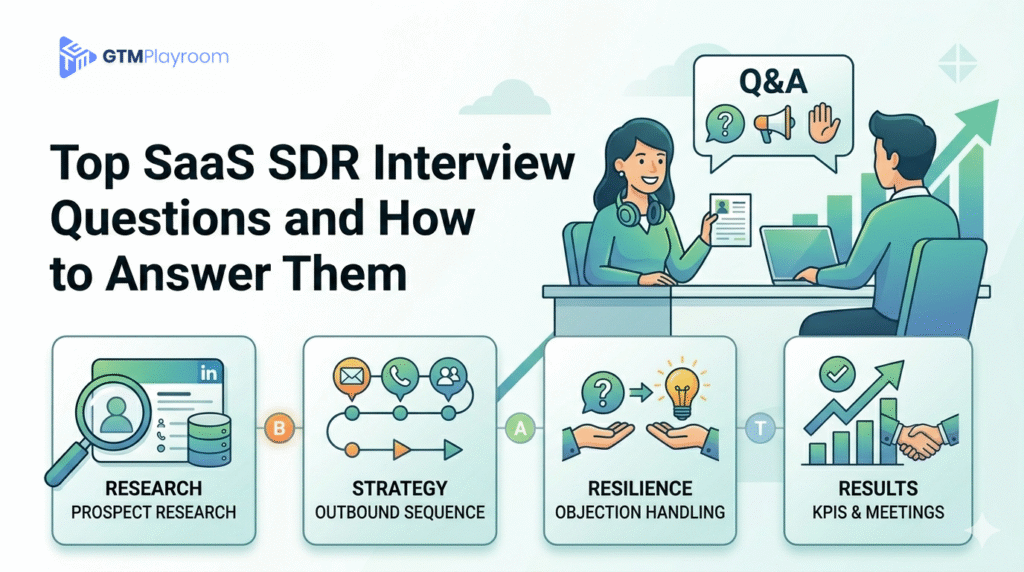
1. How Do You Research a Prospect Before Reaching Out?
Why they ask: To assess your ability to personalize outreach and understand the prospect’s business needs.
What to highlight: Discuss the depth of research you do and the tools you use:
- LinkedIn Sales Navigator: For advanced lead searches and insights into prospects’ professional backgrounds
- ZoomInfo, Apollo.io, Cognism: To access comprehensive company and contact databases
- Clay, Adapt.io: For data enrichment and gathering detailed prospect information
Example approach: I start by reviewing the prospect’s LinkedIn profile to understand their role and responsibilities. Then I gather comprehensive information using tools like ZoomInfo and Apollo, with further data enrichment through Clay. I also visit the company’s website to learn about their products and recent news. If they’ve recently secured funding or launched a new product, I mention this in my outreach to demonstrate relevance.
2. Walk Me Through Your Outbound Sequence Strategy
Why they ask: To evaluate your understanding of multichannel outreach and persistence.
What to say: Explain your approach to combining emails, calls, and social media touches over a set period. Discuss how you personalize each touchpoint and adjust your strategy based on engagement.
Tools to highlight:
- Outreach, Salesloft, Reply.io: For creating and managing multi-touch email and call sequences
- HubSpot Sales Hub: To automate and track outreach campaigns
- Salesforce: For integrating outreach activities with CRM data
Example approach: I typically use a 7-touch sequence over two weeks, starting with an email, followed by a LinkedIn connection request, then a call. Each message is personalized based on the prospect’s role and company. If there’s no response, I adjust the messaging to focus on different pain points or value propositions.
3. How Do You Handle Objections on a Cold Call?
Why they ask: To assess your resilience and ability to navigate challenging conversations.
What to say: Emphasize your active listening skills and how you address concerns by aligning the product’s value with the prospect’s needs.
Example approach: When a prospect says they’re not interested, I acknowledge their response and ask a follow-up question to understand their current challenges. For instance, “I understand. Just out of curiosity, how are you currently handling [specific process]?” This often opens up a dialogue where I can introduce how our solution might help.
4. What Do You Do When Your Pipeline Is Light?
Why they ask: To evaluate your proactivity and problem-solving skills.
What to say: Discuss how you analyze your current activities, identify gaps, and take immediate action to generate new leads.
Example approach: I review my outreach metrics to identify what’s not working, whether it’s messaging or targeting. Then I increase my activity levels, perhaps by dedicating more time to cold calls or exploring new lead sources. I also collaborate with marketing to see if there are any upcoming campaigns I can leverage.
5. How Do You Personalize Cold Emails at Scale?
Why they ask: To assess your ability to balance efficiency with personalization.
What to say: Explain your use of templates with customizable fields and how you incorporate specific details about the prospect to make each email feel personal.
Tools to highlight:
- Mailshake: For sending personalized email campaigns with tracking capabilities
- Lavender, Smartwriter.ai: AI tools that assist in crafting personalized email content
- Dripify: For automating LinkedIn outreach with personalized messages
Example approach: I use a base template for structure but personalize the opening line with something specific about the prospect, like a recent blog post they authored or a company achievement. This approach maintains efficiency while ensuring each email resonates with the recipient.
6. What KPIs Did You Track in Your Last Role?
Why they ask: To determine your familiarity with performance metrics and accountability.
What to say: List key performance indicators such as the number of calls made, emails sent, meetings booked, pipeline generated, and conversion rates. Discuss how you used these metrics to assess and improve your performance.
Example approach: I tracked daily activities like calls and emails, as well as outcomes like meetings booked and opportunities created. Monitoring these KPIs helped me identify patterns. For instance, I noticed that personalized emails had a higher response rate, so I focused more on quality over quantity.
7. How Do You Handle Prospects Who Ghost or Delay Meetings?
Why they ask: To evaluate your follow-up strategies and persistence.
What to say: Describe your approach to re-engaging prospects through multiple channels and providing additional value to rekindle interest.
Example approach: If a prospect goes silent, I send a follow-up email referencing our previous conversation and offering new insights or resources. I might also reach out via LinkedIn or leave a voicemail. The key is to remain persistent without being pushy, always aiming to provide value.
8. Describe a Time You Booked a Meeting That Seemed Impossible
Why they ask: To understand your creativity and determination in overcoming challenges.
What to say: Share a specific example where you employed unconventional tactics or went the extra mile to secure a meeting.
Example approach: I once targeted a prospect who was unresponsive to emails and calls. I noticed they were active on LinkedIn, so I engaged with their posts and eventually sent a personalized message referencing a recent article they shared. This approach caught their attention and we scheduled a meeting.
9. What Do You Know About Our Product and Ideal Customer?
Why they ask: To assess your research skills and genuine interest in the company.
What to say: Demonstrate your understanding of the company’s offerings and the problems they solve for their target audience.
Example approach: Your product streamlines project management for remote teams, addressing challenges like communication gaps and task tracking. Your ideal customers are mid-sized tech companies with distributed teams seeking to improve collaboration and productivity.
10. What Motivates You in Sales?
Why they ask: To gauge your drive and whether it aligns with the demands of the role.
What to say: Discuss intrinsic motivators like achieving goals, helping customers solve problems, and continuous learning.
Example approach: I’m motivated by setting and surpassing goals. Each closed deal represents not just a win for me but a solution for the customer. The dynamic nature of sales keeps me engaged and constantly learning.
Additional Questions to Expect in a SaaS Sales Interview
Beyond the common questions, be prepared for these:
- Tell me about yourself. Craft a concise narrative that highlights your background, key achievements, and what brings you to this opportunity.
- Why do you want to work here? Express your enthusiasm for the company’s mission, culture, and the specific role.
- Sell me our product. Demonstrate your understanding of the product’s value proposition and how it addresses customer pain points.
- How do you handle rejection? Discuss your resilience and how you use rejection as a learning opportunity.
- What are your long-term career goals? Share your aspirations and how this role aligns with your professional development plans.
Questions to Ask the Interviewer
Interviews are a two-way street. Asking insightful questions demonstrates your interest and helps you assess if the company is the right fit for you.
- What does a typical day look like for an SDR here?
- How do SDRs and AEs collaborate?
- What are the biggest challenges your sales team is currently facing?
- What does success look like in this role?
- Can you tell me about the onboarding and training process?
Final Thoughts
Securing a role as an SDR in a SaaS company requires more than just sales skills. It demands preparation, adaptability, and a genuine interest in the product and customers. By anticipating the questions above and formulating thoughtful responses, you’ll position yourself as a strong candidate ready to contribute to the company’s success.
Want to sharpen your SDR skills before your next interview? Get your GTM health checkup.
Related Articles



Want to Apply These Insights?
Book a 45-minute GTM diagnostic and get a clear roadmap for your next 30-60-90 days.