

Cold Email Deliverability in 2026: Why Your SDR Sequences Are Landing in Spam
A perfectly written cold email that never reaches the inbox is worth nothing. Here’s why so many SDR sequences are getting rejected outright in 2026 and what actually fixes it.
If your reply rates have quietly dropped over the past year and the sequences look the same as they always did, the problem probably isn’t the copy. It’s the infrastructure underneath it. Cold email deliverability changed fundamentally in 2024-2026, and most SDR teams are still running playbooks built for rules that no longer apply.
Here’s what actually changed, and what it takes to fix it.
The rules got teeth – this isn’t a filter anymore, it’s a rejection
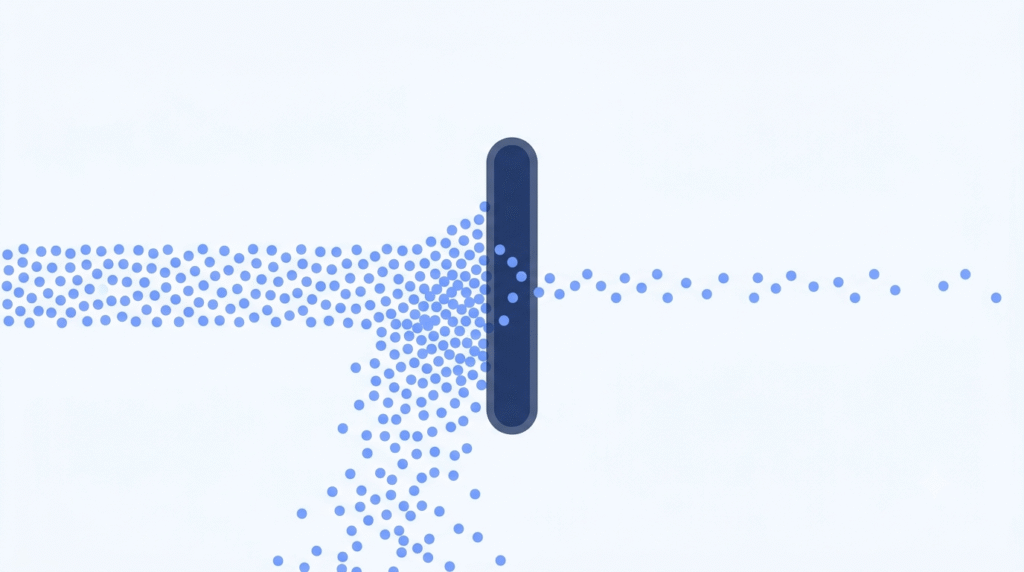
Through 2024, non-compliant bulk email got routed to spam. That was annoying but recoverable. By 2026, Gmail, Yahoo, and Microsoft have all moved from filtering to outright rejection — mail that fails their checks doesn’t land in spam, it never arrives anywhere at all, and there’s no warning email telling you it happened (HotHawk, InboxLee).
The core requirements, enforced since Google and Yahoo’s rollout in February 2024 and Microsoft’s in May 2025:
- SPF, DKIM, and DMARC, all passing and properly aligned — not just present, but configured correctly together.
- One-click unsubscribe (RFC 8058) for any sender hitting volume thresholds.
- Spam complaint rate under 0.3% as the hard enforcement line — though the practical operating ceiling most deliverability specialists now recommend is closer to 0.10% (Growth Engineer).
The compliance gap is now stark: senders meeting these requirements average around 89% inbox placement, while non-compliant senders see 22-34% of email routed to spam — a 3-7x penalty for getting the basics wrong (PowerDMARC).
The 5,000-per-day threshold is more common than SDR teams realize
The formal rules technically apply to senders pushing 5,000+ emails a day to Gmail or Yahoo addresses. That sounds like it exempts a small SDR team — until you count mailboxes. Thirty SDRs sending 20 personalized emails a day each is 600 messages daily per SDR-day, but scale that across a team running multiple sequences, multiple mailboxes per rep for volume distribution, and it adds up faster than most teams track (InboxLee). And in practice, deliverability specialists increasingly treat the strict requirements as the safe assumption regardless of volume, since enforcement keeps trending toward universal application, not just the technical threshold (HotHawk).
What actually breaks deliverability, beyond missing authentication
- Sending high volume from a brand-new, unwarmed domain. New domains should start at 5-10 emails per day and ramp gradually over 4-6 weeks — jumping straight to full sequence volume is one of the fastest ways to burn a domain’s reputation before it’s built any (Instantly).
- Sending cold outreach from your primary company domain. Most deliverability specialists now recommend a separate sending domain for cold outbound specifically, to protect the reputation of the domain your actual company relies on for every other email (FullFunnel).
- Generic, unpersonalized, mass-blasted copy. This isn’t just a reply-rate problem anymore — it’s a deliverability problem. Buyers report broad, templated pitches as spam more often, and that complaint rate is exactly what trips enforcement thresholds. Signal-personalized outreach is now reported to book meetings at 5-10x the rate of generic campaigns, and it also keeps your complaint rate low enough to protect the domain long-term (Autobound).
- Missing or broken one-click unsubscribe. Beyond the compliance requirement itself, giving recipients an easy opt-out reduces the “mark as spam” clicks that are far more damaging to sender reputation than a clean unsubscribe ever is.
The practical fix list for an SDR team right now
- Verify SPF, DKIM, and DMARC are correctly configured and aligned — not just present as DNS records, but passing validation and matching the sending domain in the From: header.
- Use a separate sending domain (or subdomain) for cold outbound, distinct from your primary company domain.
- Warm every new domain and mailbox gradually before running it at full sequence volume.
- Monitor spam complaint rate continuously using Google Postmaster Tools or an equivalent, and set an auto-pause threshold well below the 0.3% enforcement line — treat 0.1% as your real ceiling, not the regulatory one.
- Personalize at the account and signal level, not just {{firstName}} tokens. This is both a reply-rate lever and a deliverability lever now — they’re the same problem.
- Clean and verify your list before every send. Bounces above 2% actively damage domain reputation, and unverified lists are one of the most common causes of that.
Why this matters for SDR training specifically, not just tooling
It’s tempting to treat this as an ops or tooling problem to hand off to whoever manages the sequencing platform. But the SDR writing the copy is also, functionally, the person most responsible for the complaint rate that determines whether any of it gets delivered — vague, spammy, mass-blasted copy generates the complaints that get domains blocked. This is exactly the kind of judgment-driven skill that matters more now that AI handles the mechanical parts of outbound (see our piece on how AI is changing the SDR job in 2026): writing outreach that a real recipient wants to read, not just outreach that technically got sent.
Getting deliverability right isn’t a one-time setup task. It’s an ongoing discipline that sits right alongside sequence strategy and messaging — and it’s something we build directly into GTM Playroom’s SDR training, because a brilliant sequence that never reaches an inbox produces exactly zero pipeline.
If your team’s reply rates have quietly dropped and you’re not sure whether it’s copy or deliverability, get in touch — this is usually a fast diagnosis once you know where to look.
Sources: HotHawk — Email Deliverability in 2026, PowerDMARC — Bulk Email Sender Requirements, InboxLee — Gmail and Yahoo Bulk-Sender Rules 2026, Growth Engineer — Cold Email Deliverability 2026, Instantly — How to Achieve 90%+ Cold Email Deliverability, Autobound — Cold Email Guide 2026
Related Articles

Want to Apply These Insights?
Book a 45-minute GTM diagnostic and get a clear roadmap for your next 30-60-90 days.